Are you struggling with persistent pain that’s making everyday life difficult? Maybe you’ve tried various treatments, but the discomfort in your back, neck, joints, or nerves just won’t go away, impacting your mood and ability to do the things you enjoy. This ongoing struggle can feel frustrating and isolating.
Well, I want you to know there’s a field of medicine that focuses on precisely these kinds of problems: interventional pain management. Using minimally invasive techniques, we can directly target the source of your pain with procedures like injections and nerve blocks. The goal is to provide you with targeted relief, reduce your reliance on medications, and help you get back to living a fuller life.
Intrigued to learn more about how these treatments work and if they could be the solution you’ve been searching for? Keep reading for a comprehensive look at the various options available and the detailed information you need to understand how interventional pain management can help you reclaim your life from chronic pain.
What is Interventional Pain Management?
Think of interventional pain management as a special part of medicine where pain management specialists use small procedures to find and treat pain. These procedures are like little helpers that go right to where the pain is coming from to make it feel better and help you move more easily. Instead of just taking pills that affect your whole body, these methods aim to target the problem area directly. This might even mean you don’t need to take as much medicine in the long run. If your pain is really getting in the way of your day-to-day activities and other treatments haven’t done the trick, it might be time to think about seeing a pain management physician for interventional options. This could be for pain that has been around for a while (chronic pain) or even for sudden pain in some cases.
When Might Pain Injections Be a Good Idea?
Sometimes, to get relief right where it hurts, a pain management doctor might suggest an injection. It’s like delivering medicine straight to the spot that’s causing trouble. There are different kinds of injections, and they help with different types of pain:
Ouchy Back
If you have pain from things like a herniated disc, where a cushion in your spine is bulging, or spinal stenosis, where the space in your spine is getting narrow, or even sciatica, which is pain that travels down your leg, epidural steroid injections (ESIs) might help. These put medicine near your spinal cord to calm down swelling and pain.
Sore Joints in Your Spine
Your spine has small joints called facet joints. If these get sore from arthritis or an injury, an injection right into these joints can help figure out if they are the source of the pain and also treat it. Medial branch blocks are similar, where they inject near the nerves that go to these joints. If these blocks work well, the doctor might even suggest something called radiofrequency ablation later on to give you longer-lasting relief. This uses heat to stop those pain signals.
Tight and Knotty Muscles
You might have heard of trigger points, which are like little tight knots in your muscles that can be really painful. A pain control clinic might offer trigger point injections right into these knots to help them relax. For neck pain caused by tense muscles, sometimes even Botox injections can be considered.
Hurting Knees, Shoulders, or Hips
If your big joints are achy from arthritis or other problems, injections right into these joints with medicine like a corticosteroid and a numbing medicine can bring relief for several months. You can even get injections for your sacroiliac joint, which is in your lower back and can cause pain in your bottom.
Finding the Problem?
Sometimes, injections like facet joint injections or medial branch blocks aren’t just for treatment; they can also help the pain management specialist figure out exactly where your pain is coming from.
Help with Moving
If pain is stopping you from doing your physical therapy, an injection to ease the pain might help you get started and on the road to recovery.
Often, these injections contain a numbing medicine to give you quick relief and a steroid to help with swelling that can cause pain.

When Could Nerve Blocks Be the Answer?
Nerve blocks are another clever way that pain management physicians can help. Instead of just putting medicine in an area, they inject medicine very close to specific nerves to stop them from sending pain signals to your brain.
Pain from Damaged Nerves
If you have neuropathy, which is pain from damaged nerves, or conditions like complex regional pain syndrome (CRPS), or if a nerve is trapped somewhere, peripheral nerve blocks might be an option. These target the nerves outside of your spinal cord, like in your arms or legs.
Pain Caused by Your Body’s Automatic System
You have something called the sympathetic nervous system that controls things like blood flow. If this system is causing your pain, like in CRPS, a sympathetic nerve block can help calm these nerves down.
Back and Leg Pain
Just like with injections, epidural nerve blocks can be used to ease pain in areas like your legs or tummy, and they are often used for back and leg pain too. Selective nerve root blocks (SNRBs) can target a specific nerve root that’s irritated in your neck or lower back.
Headaches and Face Pain
If you get really bad headaches or migraines, occipital nerve blocks (in the back of your head) might make them less frequent and less intense. For severe face pain, like trigeminal neuralgia, there are also nerve blocks that can help.
Finding the Cause Again
Just like some injections, nerve blocks can be super helpful for figuring out where your pain is coming from. If a nerve block takes away the pain, it tells the pain management specialist that those specific nerves are involved. For example, medial branch blocks can help find the source of pain in your facet joints.
Trying Things Out
If a nerve block gives you really good relief, even if it doesn’t last very long because it’s just a numbing medicine, it can tell your doctor that a longer-lasting treatment, like radiofrequency ablation, might be a good next step.
Some nerve blocks only give you relief for a short time while the numbing medicine works. But sometimes, they can include anti-inflammatory medicine to give you relief for longer. There are even some nerve blocks that can last longer, but these are usually more involved.
What Are the Good Things About These Treatments
There are many reasons why a pain management clinic might suggest injections or nerve blocks:
- Right Where It Hurts: They target the exact spot where your pain is, giving you more focused relief than pills that go all through your body.
- Less Need for Pills: By treating the cause of the pain directly, you might not need to take as many pain medicines, which can have side effects.
- Move More Easily: Feeling less pain can help you do your daily activities and enjoy life more.
- Finding the Problem: Some of these procedures help your doctor understand exactly where your pain is coming from so they can plan the best treatment for you.
- Not a Big Deal: They are usually minimally invasive, meaning they don’t require big cuts or a long time in the hospital.
What Happens When You Get One of These Procedures
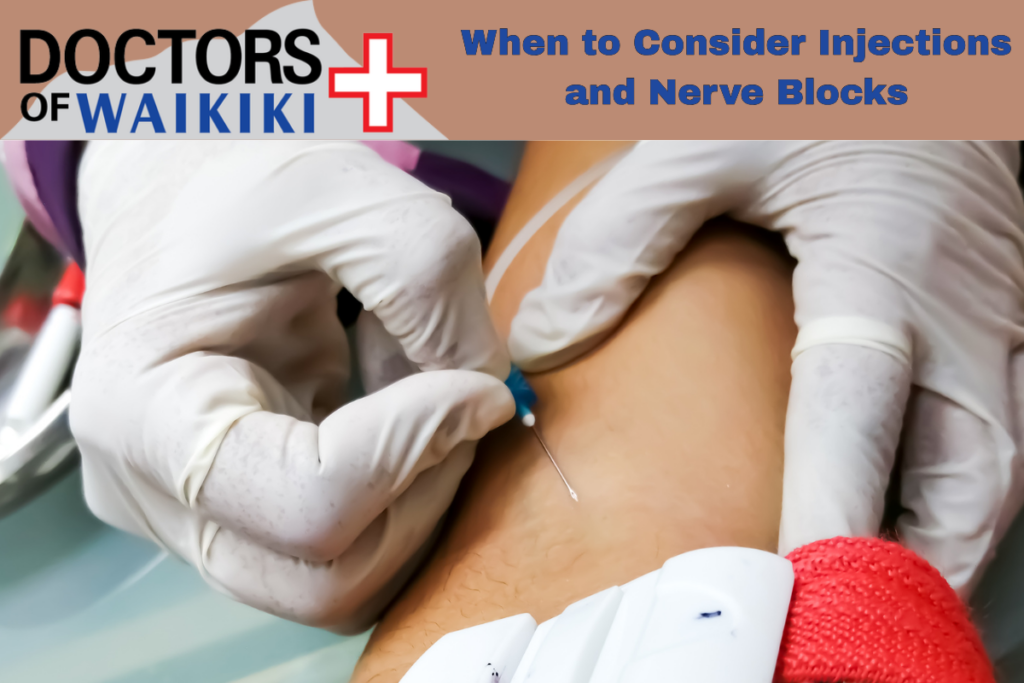
Getting an injection or a nerve block is usually a pretty quick process.
- Often, it’s done in a clinic, and you don’t have to stay overnight.
- The doctor will clean your skin and might give you a little numbing medicine with a small needle.
- To make sure the medicine goes to the right place, they often use something like an X-ray or ultrasound to guide the needle.
- Then, they’ll inject the medicine near the nerve or in the area that’s causing pain.
- Afterwards, you’ll probably rest for a little while to make sure everything is okay before you go home.
How Long Will the Relief Last
This is a question I get asked a lot, and the answer is, it depends! It’s different for everyone and depends on the type of procedure and what’s causing your pain.
- Nerve blocks with just numbing medicine might only give you relief for a few hours or days.
- Corticosteroid injections can help with swelling and pain for weeks or even months.
- If a temporary nerve block makes you feel a lot better, your pain management doctor might talk to you about treatments like radiofrequency ablation that could give you relief for much longer, sometimes months or even years.
Are These Procedures Safe
Generally, injections and nerve blocks are safe when a trained pain management specialist does them. But like any medical thing, there are some possible risks, like infection, bleeding, or accidentally getting the medicine in the wrong place. It’s super important to talk to your doctor about the good things and the possible risks before you have a procedure.
Who Might Not Be Able to Have These Treatments
Sometimes, these treatments might not be right for everyone. For example, if you have an infection where the needle would go in, or if you have a problem with your blood clotting, it might not be safe. That’s why it’s really important for a pain management physician to check you out carefully to see if these procedures are a good fit for you.
How Do These Fit in with Other Pain Treatments
Injections and nerve blocks are often just one part of a bigger plan to help you manage your pain. This plan might also include taking medicines, doing physical therapy, and maybe even things like yoga or meditation. Your pain management specialist will work with other doctors and therapists to create the best plan for you.
What if Injections and Nerve Blocks Don’t Completely Fix the Pain
Sometimes, even though injections and nerve blocks can help a lot, they might not get rid of all your pain. If that happens, there are other things a pain management doctor at a pain control clinic might suggest, like radiofrequency ablation for longer relief, spinal cord stimulation which uses gentle electrical signals to change how your body feels pain, or even small surgeries for things like spinal stenosis.
Finding Your Path to Less Pain
If you’re tired of living with pain, I really encourage you to talk to a pain management doctor or visit a pain clinic. They are experts in figuring out what’s causing your pain and can help you explore all the different ways to feel better, including injections and nerve blocks. Getting the right diagnosis from a pain management specialist is the first step towards finding a treatment plan that’s just right for you. Remember, you don’t have to live with pain, and there are people who can help you find your way to a more comfortable life!

Pain Management Honolulu – Doctors of Waikiki
Are you seeking effective pain management solutions in Honolulu? At Doctors of Waikiki, we understand how debilitating chronic pain can be, impacting your daily life and well-being. If you’re tired of persistent discomfort in your back, neck, joints, or nerves, it’s time to explore targeted treatments that go beyond traditional methods.
While interventional pain management encompasses various techniques to directly address the source of your pain, we offer cutting-edge options tailored to your needs. Discover the benefits of PRP injections, a regenerative therapy using your body’s own healing power, and shockwave therapy, a non-invasive approach to stimulate tissue repair and reduce pain.
Don’t let pain dictate your life in paradise. Our experienced team at Doctors of Waikiki is ready to help you find lasting relief and improved functionality. Contact us today at (808) 922-2112 to schedule your consultation and take the first step towards a more comfortable future.

Frequently Asked Questions About When to Consider Interventional Pain Management
When are injections or nerve blocks typically considered in the course of pain management?
Interventional pain management, including injections and nerve blocks, is generally considered when pain is severe enough to interfere with daily activities and when other, more conservative treatments have not been successful in reducing pain. These techniques are not usually the first treatment to explore but rather a way to help manage pain that hasn’t responded to conservative approaches. They may also be considered as an adjunct to medication and physical therapy. If you are searching for a solution to your chronic or acute pain after other treatments have failed, it may be time to find an interventional pain management doctor who can help.
For what specific types of pain or conditions might my doctor recommend injections or nerve blocks?
Your doctor might recommend pain injections or nerve blocks for a wide range of conditions. These include spinal conditions like degenerative disc disease, herniated spinal discs, and spinal narrowing (spinal stenosis). They can also be effective for pain control related to osteoarthritis and rheumatoid arthritis. If you have pain related to a pinched nerve in your spine (radiculopathy) or nerve pain in the limbs (neuropathy, complex regional pain syndrome, nerve entrapment syndromes), nerve blocks may be considered. Additionally, injections can target specific sources of pain such as inflamed facet joints, tight muscle knots (trigger points), or the sacroiliac joint.
How can nerve blocks help in understanding the source of my pain?
Nerve blocks are not only used for therapeutic relief but also as diagnostic tools. If you experience pain relief from a diagnostic nerve block injection, it generally indicates that the targeted nerves are the source of the pain. By observing how you react to a temporary nerve block and how it affects your pain, your healthcare provider can better figure out the reason for your pain, where it is located, and how to best treat it. This information can then guide further treatment decisions.
If I have chronic pain, and medications only offer limited relief, when should I ask my doctor about injections or nerve blocks?
If you have consistent, long-term chronic pain that is not adequately controlled by medications or other conservative treatments, it is appropriate to discuss interventional pain management options like injections and nerve blocks with your doctor. These procedures directly target the source of pain and may reduce the need for long-term medication use. By achieving better pain control through targeted interventions, you may find it easier to engage in physical therapy and improve your overall functionality.
Can injections or nerve blocks help me avoid or delay the need for more invasive surgeries?
In some cases, interventional pain management techniques may help you avoid or delay more invasive surgical procedures. For conditions like herniated discs or spinal stenosis, epidural steroid injections can reduce inflammation and pain, potentially making surgery unnecessary. Nerve blocks can provide significant relief from joint pain or nerve pain, which might otherwise be considered for surgical intervention. Minimally invasive procedures like radiofrequency ablation or interspinous spacers for spinal stenosis also offer alternatives to traditional open surgery.
What kind of initial evaluation should I expect before a doctor recommends injections or nerve blocks?
Before recommending any interventional pain management procedure, a qualified healthcare professional will typically conduct a thorough evaluation to determine suitability. This will likely involve a review of your medical history, a physical examination, and possibly a review of any existing imaging, such as MRIs. The doctor will discuss your pain symptoms, previous treatments you have tried, and your overall health to understand the underlying cause of your pain and determine the most appropriate approach based on your individual needs.
Are there any reasons why I might not be a suitable candidate for injections or nerve blocks?
Yes, there are certain conditions that may limit the use of interventional pain management techniques. These can include having an infection at the site of the intended injection, certain allergies, bleeding disorders, pregnancy, or severe spinal abnormalities. A thorough evaluation by your healthcare provider is necessary to identify any potential contraindications and ensure the safety of these procedures for you.
Read Chronic vs. Acute Pain: Why Different Pain Management Strategies Matter