Why a child’s pain story should never be treated like an adult’s
Pain Management in Honolulu, HI matters even more when the patient is a child, because kids do not experience, describe, or respond to pain the same way adults do. That is where many parents feel stuck. A child may cry, shut down, act frightened, or say nothing at all, while the pain keeps building. That uncertainty can make a small injury feel overwhelming and a bigger problem easy to miss. The good news is that pediatric pain care is more thoughtful than many families realize. It focuses on age, weight, development, emotional comfort, and safe treatment choices. This guide explains what makes children’s pain treatment different, when a pain management clinic may help, and when a pain control clinic, urgent care, walk-in clinic, or emergency care is the smarter next step.
Kids do not just feel pain differently—they show it differently

Children are not simply smaller adults. Their nervous systems are still developing, their coping skills are different, and their ability to explain symptoms depends heavily on age and maturity. An infant may show pain through crying, body stiffness, poor feeding, or a change in sleep. A toddler may become clingy, refuse to walk, or act irritable. An older child may use vague words like “owie,” “burning,” or “my tummy hurts,” even when the source is somewhere else. That is why a skilled pain management doctor does not rely on words alone. Observation, parent input, exam findings, and validated pain scales all matter.
A common mistake is assuming that a quiet child is not in much pain. In reality, some children freeze, withdraw, or become unusually sleepy when they hurt. Others become fearful before a shot, exam, or dressing change, and that fear can intensify how strongly they feel pain. Good pediatric pain care addresses both the physical sensation and the distress around it.
Pain scales for children are not one-size-fits-all
Adults are usually asked to rate pain from 0 to 10. Children may need different tools. For babies and nonverbal children, clinicians often use behavioral scales such as FLACC, which looks at face, legs, activity, cry, and consolability. For younger children who can participate, face-based scales may work better than abstract numbers. Older children and teens may use numeric scales, but even then, context matters. A child’s report should be taken seriously and matched with function, exam findings, and recent history.
The safest pain plan starts with the right diagnosis
Before any pain doctor or walk-in clinic talks about treatment, the first question should be simple: what is causing the pain? In children, pain may come from injuries, infections, constipation, migraines, growing pains, sports overuse, dental problems, recovery after a procedure, chronic conditions, or pain amplification syndromes. Sometimes the source is obvious. Sometimes it is not. That is why pediatric pain care begins with careful assessment rather than jumping straight to medication.
A strong care plan usually considers:
- Where the pain is and when it started
- How severe it is and whether it is getting worse
- Whether fever, swelling, vomiting, weakness, or breathing trouble is present
- What makes it better or worse
- Whether the pain affects walking, eating, sleep, or school
- The child’s age, weight, medical history, and current medicines
That broad view helps a pain management clinic decide whether simple home care is enough, whether in-office treatment is appropriate, or whether a child needs imaging, specialist follow-up, or emergency evaluation.
Gentle first steps often work better than parents expect

Many cases of pediatric pain improve with a layered approach instead of one “strong” medicine. Depending on the problem, treatment may include rest, ice, heat, elevation, splinting, hydration, stretching, positioning, topical anesthetics for procedures, and age-appropriate distraction. Reading, music, games, guided breathing, and a calm parent’s presence can reduce distress and improve how a child tolerates pain. For needle-related pain, positioning, preparation, distraction, and topical numbing options can make a meaningful difference.
This is one reason pediatric care feels different at a quality pain control clinic. The goal is not only to lower the pain score. It is to protect function, reduce fear, avoid unnecessary medication, and keep the experience from becoming traumatic. In many children, especially with minor injuries or short-term illness, those measures are enough when paired with the right over-the-counter medicine.
Medicine dosing in children requires precision
Dosing for children is based on age and, more importantly, weight. Parents should not guess. Acetaminophen and ibuprofen are commonly used for children when medically appropriate, but the correct dose depends on the child’s weight and the product concentration. Using a household spoon, doubling up on two products with the same ingredient, or following an adult schedule can lead to problems. Aspirin is generally avoided in children and teens in certain viral illness settings because of the risk of serious complications.
That is why a pain management doctor or urgent care clinician should review the exact medicine name, strength, timing, and total amount taken in the past 24 hours. This is especially important if the child has asthma, kidney disease, liver disease, dehydration, ulcers, bleeding risk, or has been vomiting.
Why opioid decisions are more cautious in children
Parents often assume stronger medicine means better relief. In pediatrics, that is not always true. The American Academy of Pediatrics’ recent guidance emphasizes a multimodal approach, using non-opioid options and non-drug strategies first when possible, and reserving opioids for select cases of acute pain when benefits outweigh risks. Evidence reviewed by the AAP found no proof that opioids are superior to non-opioid alternatives for many common painful conditions in children.
Certain medicines require extra caution. The FDA states codeine and tramadol should not be used in children younger than 12 because of serious breathing risks, and codeine has additional warnings after tonsil or adenoid surgery. That is a major reason pediatric pain treatment today looks more conservative and more individualized than it did years ago.
For Honolulu families, another practical point matters: Hawaii prescribers are required to consult the state’s prescription drug monitoring program before prescribing many Schedule II to IV controlled substances, with limited exceptions. Hawaii also limits certain initial opioid prescribing situations, including emergency-service settings, as part of broader opioid safety rules. Those guardrails are meant to reduce misuse, dangerous combinations, and avoidable harm.
What that means for parents at a pain management clinic or urgent care
If your child goes to a pain management clinic, pain doctor, urgent care, or walk-in clinic for significant pain, you may notice more questions than expected before any prescription is given. That is normal. The clinician may ask about prior controlled medications, pharmacy history, surgery, chronic conditions, current sedating medicines, and whether the pain can be managed without opioids. In Hawaii, careful prescribing is not just good practice. It is part of safe, regulated care.
Read Pain Management in Honolulu, HI: How is Pain Managed in the Elderly? (5 Safe Approaches)
Chronic pain in children needs a wider lens

Acute pain after an injury or illness is one thing. Chronic or recurring pain is different. Headaches, abdominal pain, musculoskeletal pain, nerve pain, amplified pain, and pain tied to anxiety, sleep disruption, or disability often need a broader plan. Research supports interdisciplinary care for children with chronic pain. That means treatment may involve a pediatrician, pain management doctor, physical therapy, psychology or cognitive behavioral therapy, sleep support, school accommodations, and measured activity goals.
This is where parents sometimes become frustrated. They expect the pain control clinic to “find the one medicine.” But chronic pediatric pain often improves when the care team works on the whole picture:
- sleep quality
- movement and conditioning
- fear avoidance
- stress and coping
- return to school and routines
- family communication around pain
- targeted medical treatment for the underlying cause
That approach may sound slower, but it is often more effective than repeatedly chasing short-term relief.
Functional improvement matters as much as pain scores
A child who still has some pain but is sleeping better, eating normally, walking more, and returning to school is often moving in the right direction. That is a central difference in pediatric pain medicine. The goal is not always complete elimination of every symptom immediately. It is safe relief plus improved daily function, emotional stability, and confidence.
When a walk-in clinic may help and when it is not enough

A walk-in clinic or urgent care can be useful for many childhood pain complaints, especially when the child may need same-day evaluation but does not appear critically ill. Examples can include minor sprains, mild burns, sore throat with pain, ear pain, some headaches, mild dehydration concerns, small cuts, and non-emergency stomach complaints. Parents often choose urgent care centers because they offer convenience when the pediatrician is unavailable.
But some symptoms need higher-level care right away. Seek emergency care for severe or rapidly worsening pain, trouble breathing, blue or gray skin color, seizures, confusion, serious head injury symptoms, heavy bleeding, severe burns, major fractures, inability to wake the child normally, persistent vomiting with severe pain, or when your child looks very sick. Pediatric-ready emergency departments can be especially important for very ill or injured children because they are equipped and staffed for pediatric emergencies.
A practical parent rule
Choose urgent care or a walk-in clinic when your child needs prompt evaluation but is stable. Choose the emergency room when the pain is severe, the child’s behavior is alarming, or there are red-flag symptoms affecting breathing, consciousness, major injury, or rapidly worsening condition.
Questions parents should ask at the visit
Whether you are seeing a pediatrician, a pain management clinic, a pain doctor, or an urgent care clinician, good questions can make the visit more useful.
Smart questions to bring with you
- What is the most likely cause of the pain?
- What warning signs mean we should come back or go to the ER?
- What dose is correct for my child’s weight?
- Should we use medicine on a schedule or only as needed?
- What non-medicine options should we use at home?
- Is this expected to improve in hours, days, or longer?
- Do we need follow-up with a specialist or a pain management doctor?
- Will pain affect sleep, sports, school, or activity restrictions?
Those questions help families avoid under-treating pain at home and also avoid using medicine longer than needed.
What makes pediatric pain treatment in Honolulu feel different
The answer is not one single therapy. It is the mindset. Pain treatment in children should be age-aware, weight-based, emotionally sensitive, and cautious with high-risk medications. In Honolulu, families should also expect care that follows Hawaii prescribing rules, state oversight of healthcare facilities, and modern pediatric standards that prioritize safe multimodal pain relief over reflexively reaching for stronger drugs.
For parents, that means the best pain plan is rarely the fastest prescription. It is the one that fits the child in front of you: their age, condition, risk factors, pain severity, and ability to function. When that happens, children are more likely to recover comfortably and parents feel more confident about what to do next.
Pain Management in Honolulu, HI – Doctors of Waikiki

At Doctors of Waikiki, we know parents want fast answers when a child or teen is hurting. Our team provides convenient care in Honolulu, Hawaii for families looking for trusted urgent care centers that take pain seriously and evaluate symptoms carefully. We offer same-day access through our walk-in clinic and help guide the next step when pain needs further evaluation. Our pain management clinic focuses on PRP injections and shockwave therapy for appropriate cases, with treatment plans built around safety, comfort, and function. When you need a pain management doctor, a pain doctor, or prompt urgent care for painful injuries and musculoskeletal concerns, call us at (808) 922-2112 or fill out our contact form. We are here to help you find the right care without unnecessary delays.
Frequently Asked Questions
Can untreated pain affect a child long after the injury or illness is over?
Yes, in some cases it can. Repeated or poorly controlled pain may affect sleep, mood, movement, trust in medical settings, and how a child responds to future pain. Some children become fearful of exams, shots, physical activity, or school participation after a painful event. That does not mean every episode of pain leads to lasting problems, but it does mean timely, thoughtful treatment matters. Parents can help by taking pain seriously, following the care plan, and watching for behavior changes after recovery. If pain-related fear or avoidance lingers, follow-up with a pediatric professional is a smart next step.
Is it normal for a child to say “my stomach hurts” when the real problem is stress or anxiety?
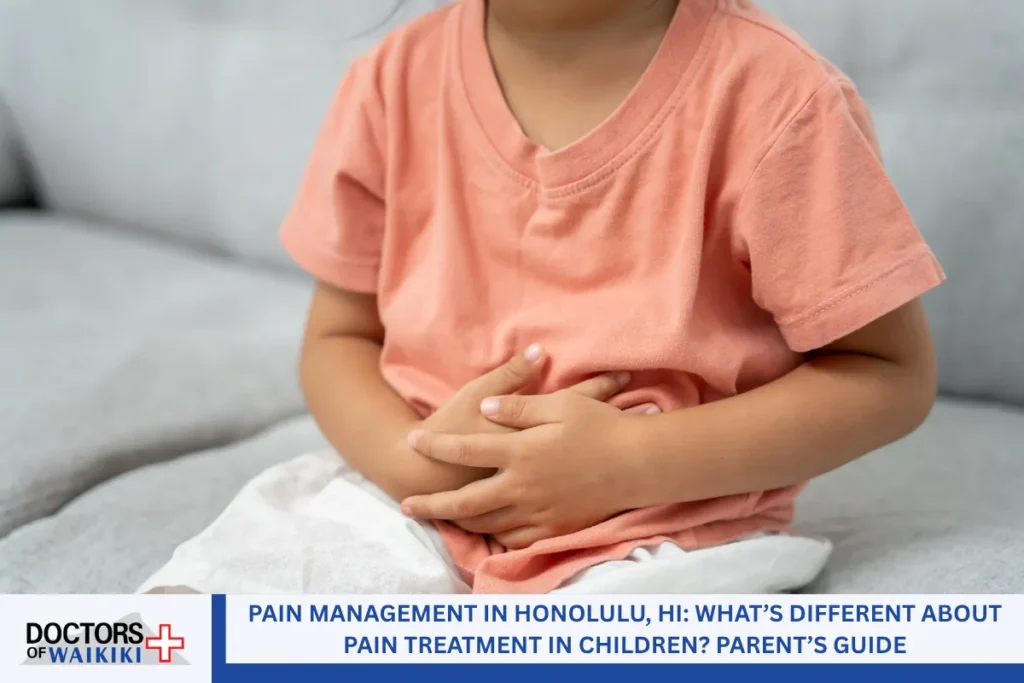
It can be. Children often express emotional distress through physical symptoms, and stomach pain is one of the most common examples. That said, parents should not assume abdominal pain is “just stress” without proper assessment. A child can have real pain with both physical and emotional contributors at the same time. Pattern matters. Recurring pain before school, sports, tests, or conflict may suggest stress is part of the picture. A clinician can help rule out urgent causes, look for constipation or infection, and decide whether behavioral support, routine changes, or further medical work-up is needed.
Are children more likely than adults to be afraid of needles and medical procedures?
Yes. Needle fear is very common in children, and that fear can increase how much pain they feel during vaccines, blood draws, IV placement, or wound care. The helpful part is that fear can be reduced. Preparation, honest age-appropriate language, distraction, comfort positioning, parental presence, and topical numbing methods can all improve the experience. Telling a child “this won’t hurt at all” may backfire if it does hurt. A better approach is calm coaching: explain what will happen, remind them you will stay with them, and praise coping rather than focusing only on bravery.
Should parents keep leftover prescription pain medicine at home just in case?
Usually no. Keeping leftover opioid medication “just in case” can create avoidable risks for children, teens, visitors, and others in the home. Medications should be used only as directed for the specific condition and duration prescribed. If stronger medicine is no longer needed, ask the pharmacy or local take-back program about safe disposal. Also remember that a child’s future pain may come from a different cause, so reusing old medicine without medical advice is unsafe. Even non-opioid medicines should be stored out of reach, with dosing devices kept in the original packaging to prevent mistakes later.
Does a teenager with sports pain need a pain management doctor right away?
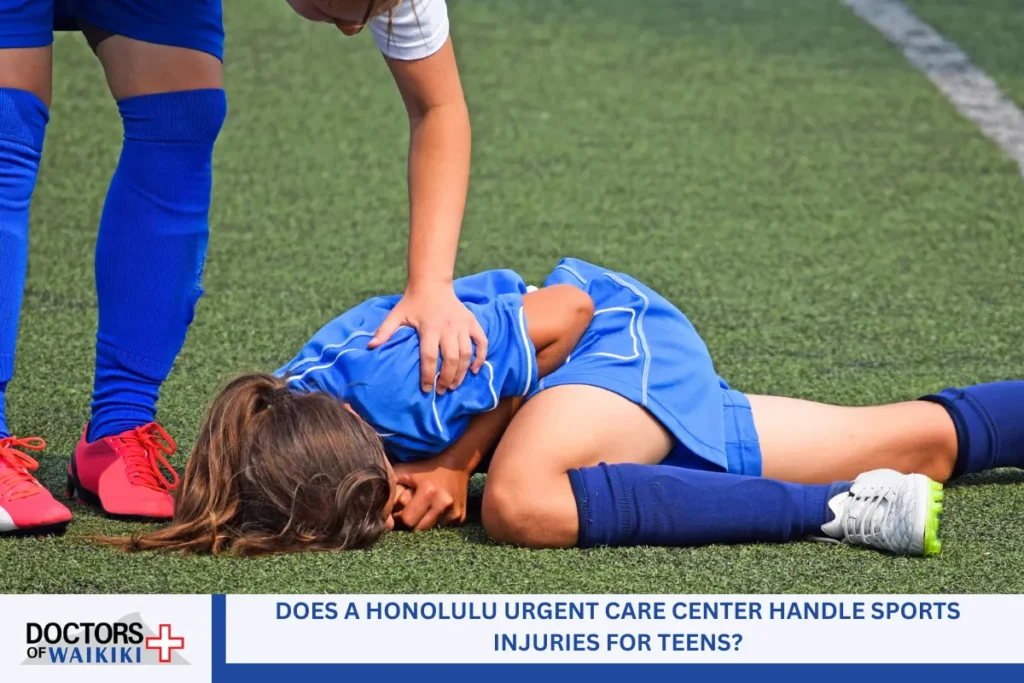
Not always. Many sports-related aches, strains, and overuse injuries can first be evaluated by a primary care clinician, sports medicine provider, urgent care, or walk-in clinic. A pain management doctor may become more relevant when pain keeps returning, limits function for weeks, does not match the exam, or continues after appropriate rest and treatment. Teen athletes also need evaluation for training load, mechanics, sleep, nutrition, and pressure to return too soon. When pain becomes chronic or starts affecting mood and school life, a broader pain management clinic approach may be more helpful than repeating short-term fixes.
This article is for general education only and is not medical advice. Children with severe, worsening, or emergency symptoms need prompt in-person evaluation.
Read Quick Exams: Do Honolulu Urgent Care Centers Perform Sports and School Physicals?