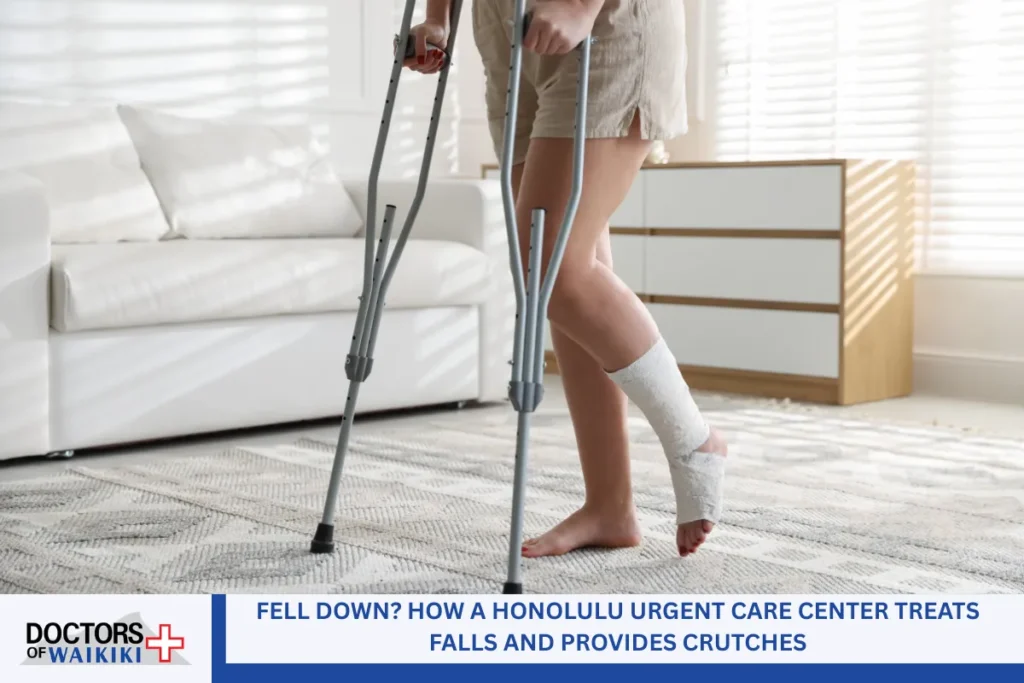
A Honolulu urgent care center is often the fastest path to relief after a sudden fall on a rain-slicked sidewalk, a hotel staircase, or a rocky hiking trail. One moment you are enjoying your day, and the next you are sitting on the ground wondering whether your ankle is sprained or broken. The worry compounds quickly: Is something fractured? Do I need an emergency room? What happens to my travel plans?
The good news is that modern urgent care services across Honolulu County handle most sprains, suspected fractures, minor cuts, and mild head bumps efficiently and affordably. This article walks you through what to do right after a fall, how medical professionals evaluate your injury, the treatments you can expect, and how you will be fitted for crutches or braces before heading home to recover.
Key Takeaways
- A Honolulu urgent care center can quickly evaluate fall injuries, perform on-site X-rays, and begin treatment for most non life threatening conditions without the long wait times of an emergency room.
- Experienced staff distinguish between injuries appropriate for a walk in clinic and serious trauma that requires emergency services or the nearest emergency department.
- Clinicians fit and adjust crutches on the spot, teach safe use on stairs and sidewalks, and provide written instructions for recovery at home.
- Follow up care, including referrals to orthopedics or physical therapy, is arranged before patients leave the clinic.
- Urgent care visits in Honolulu typically do not require an appointment, and most clinics are open seven days a week.
When a Fall Needs Urgent Care Versus a 911 Emergency
Not every fall is the same. Some qualify as minor emergencies that a walk-in clinic can manage, while others are life threatening and demand an ambulance. Knowing the difference saves time and could save your life.
Call 911 or go directly to the nearest emergency department if you experience any of the following after a fall:
- Loss of consciousness, even briefly
- Severe headache, confusion, or repeated vomiting
- Chest pain or difficulty breathing
- Uncontrolled bleeding that does not slow with direct pressure
- Obvious bone deformity or an open wound over a possible fracture
- Inability to move a limb or feel sensation below the injury
- Suspected spinal or hip injury
Urgent care centers in Honolulu treat fall-related injuries that are serious but not life threatening. Conditions like wrist and ankle sprains, suspected minor fractures, bruises, painful but stable joints, and mild back pain are well within the scope of an urgent care visit. Honolulu sidewalks, beaches, and trails present plenty of opportunities for slips, but as long as the injury does not involve red-flag symptoms, a trip to urgent care provides prompt medical attention at a fraction of emergency room costs. If an urgent care doctor identifies something beyond the clinic’s capability, the team can arrange a safe transfer to a higher level of medical care.
What to Do Immediately After You Fall in Honolulu
The minutes between hitting the ground and reaching a clinic matter. Here is what to do right away.
Stay still for a moment. Before trying to stand, check for severe pain, dizziness, numbness, or tingling. Rushing to get up can worsen a fracture or cause a second fall. If you suspect a spinal or hip injury, do not move and ask someone nearby to call emergency services.
For a suspected sprain or strain, follow the RICE method:
- Rest the injured limb and avoid putting weight on it.
- Ice the area with a towel-wrapped cold pack for 15 to 20 minutes.
- Compress the area gently with an elastic bandage if one is available.
- Elevate the limb above heart level to reduce swelling.
Before heading to the clinic, gather a few details that will help the urgent care doctor make a faster diagnosis and treatment plan. Note how the fall happened, how you landed, any medications you take (especially blood thinners), and whether you have conditions like osteoporosis or diabetes. Bring your insurance card and photo ID.
Tourists and residents alike in Honolulu County can use ride services or taxis if driving is not an option. Walk-in options are available at urgent care clinics throughout the area, so no appointment needed.
How a Honolulu Urgent Care Center Evaluates Fall Injuries

Knowing what to expect when you walk through the door can ease a lot of anxiety. Here is the typical evaluation process at a Honolulu urgent care center.
Triage and Initial Screening
A front-desk team member or nurse will ask about the mechanism of your fall, your symptoms, and any red-flag warning signs. Vital signs are taken to rule out shock or other systemic concerns. This quick screening helps staff prioritize your case and confirm that the injury is appropriate for urgent care rather than an emergency room.
Physical Examination
Board certified providers trained in family medicine or emergency medicine perform a focused exam of the injured area along with the joints above and below. They check for swelling, tenderness, range of motion, ligament stability, and neurovascular status including sensation, pulses, and capillary refill. Common urgent care services include physical exams and X-rays for fall injuries, which means most of the diagnostic work happens in a single visit. Clinicians also ask about pre-existing conditions, current medications, and previous injuries, because factors like osteoporosis or blood thinner use can change both the imaging threshold and the treatment approach.
On-Site Imaging and Lab Work
Many urgent care centers in Honolulu, HI have on-site digital X-ray equipment and in-house lab testing. Urgent care centers provide on-site imaging and lab services, which means results often come back within minutes. Digital X-ray delivers accurate diagnostics with lower radiation exposure and faster turnaround compared to older film-based systems. If the provider suspects a fracture, imaging confirms or rules it out before you leave the clinic.
Read Dehydration in Seniors: Can a Honolulu Urgent Care Center Run Electrolyte Tests?
From Bruise to Fracture: Common Fall Injuries and Treatments
Falls can produce a wide spectrum of injuries, and the treatment plan from an urgent care doctor is tailored to the exact diagnosis.
Soft Tissue Injuries
Bruises, muscle strains, and ligament sprains in the wrists, ankles, and knees are among the most common reasons for an urgent care visit after a fall. Treatment typically includes rest, over-the-counter pain relievers, compression wraps, and short-term bracing. Sprain severity matters: a Grade I sprain may heal in one to two weeks, a Grade II sprain takes three to six weeks, and a Grade III sprain can require six to twelve weeks or more of recovery time. Patients can also receive treatment for sprains and minor cuts during the same visit. Urgent care centers often treat cuts, scrapes, and minor lacerations alongside musculoskeletal injuries.
Minor Fractures
Nondisplaced wrist fractures, small foot fractures, and stable ankle fractures are frequently diagnosed at walk-in clinics after falls. Urgent care centers offer splinting and bracing to immobilize injuries and protect alignment until the patient can follow up with an orthopedic specialist. A walking boot or fiberglass splint is applied on the spot, and detailed weight-bearing instructions are given before discharge.
Mild Head Bumps
When a patient sustains a mild bump to the head without loss of consciousness, confusion, or vomiting, the provider will give observation instructions and a list of warning signs that should trigger a trip to the emergency room. Rest and avoidance of strenuous activity are standard advice.
Pain Management
Urgent care centers may provide pain management services ranging from oral medications like acetaminophen and anti-inflammatory drugs to topical treatments. When stronger prescription options are appropriate, providers follow Hawaii prescribing rules and factor in age, kidney function, and other medications. Personalized care plans account for activity level, travel plans, and whether patients reside in Honolulu Hawaii or are visiting short term.
Crutches, Boots, and Braces: Getting You Safely Back on Your Feet
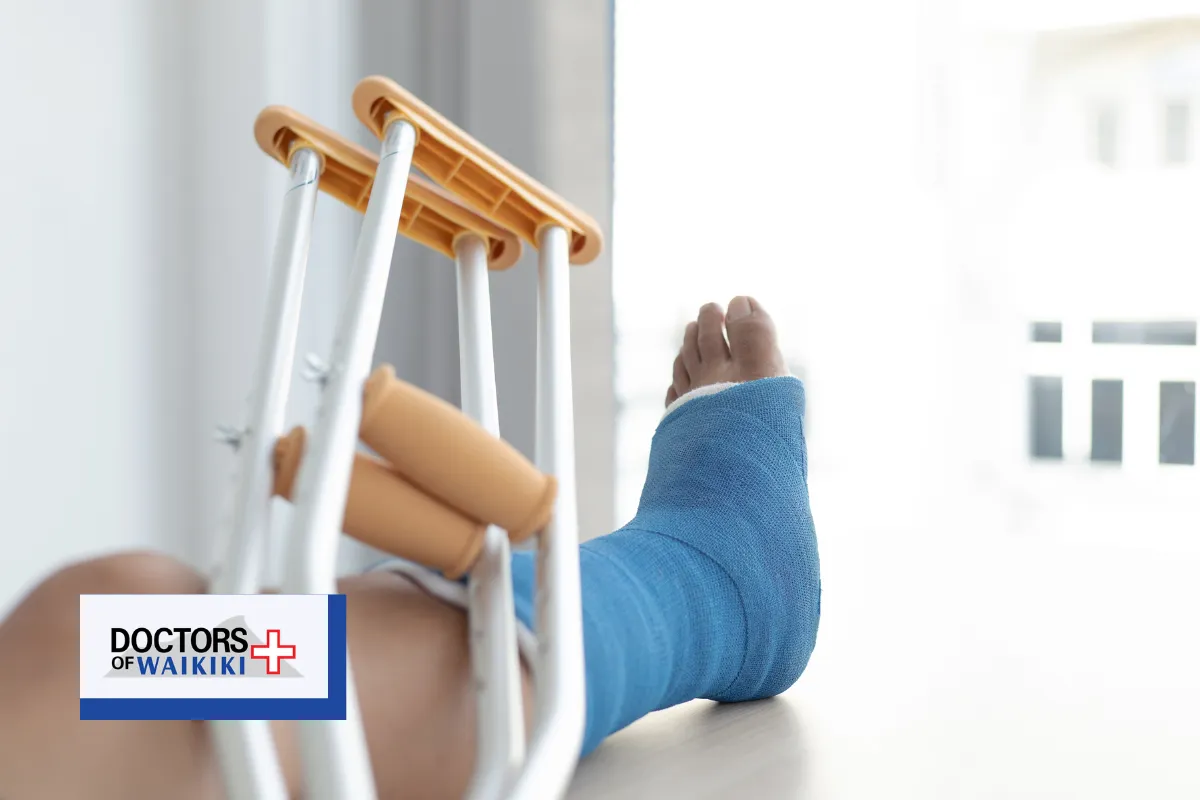
Many fall injuries leave patients unable to walk normally, and an urgent care center addresses that before you leave.
Choosing the Right Device
Staff determine whether a patient needs crutches, a cane, a walking boot, or an ankle or knee brace based on weight-bearing status and pain level. To get crutches, patients must be evaluated by a provider who confirms that the device is medically necessary. Crutches may be provided on-site depending on clinic availability, while other locations sell or rent equipment directly.
Proper Crutch Fitting
Correct fitting prevents secondary injuries. The underarm pads should sit about two to three finger-widths below the armpits to avoid nerve compression. The elbow should bend at roughly 30 degrees when hands rest on the grips, and the handgrip height should align with the hip crease for comfortable support.
Safety Training
Providers at urgent care clinics teach patients how to safely use crutches, including how to move on flat ground, navigate curbs and stairs, and avoid putting pressure in the armpits. Honolulu sidewalks can be uneven and slippery after rain, so staff often emphasize scanning the ground ahead and using handrails wherever possible. Written instructions or brief demonstrations help both visitors and local residents remember weight-bearing precautions once they leave the clinic. Patients with additional questions about cost, insurance coverage, or return policies for equipment should ask before checkout.
Recovery, Follow-Up, and Preventing Future Falls in Honolulu

Care for a fall does not end when you leave the clinic. Recovery planning and prevention are just as important as the initial diagnosis and treatment.
Healing Timelines
Mild sprains often resolve in one to two weeks. Moderate sprains may take three to six weeks, and minor nondisplaced fractures typically require four to six weeks of immobilization before transitioning to rehabilitation. Following activity restrictions from your urgent care doctor is essential to avoid setbacks.
When to Seek Follow Up Care
Schedule a follow-up if pain increases rather than decreases, swelling persists beyond expected timelines, numbness or tingling develops, or range of motion does not improve. Urgent care centers refer patients to specialists if necessary, including orthopedic surgeons for displaced fractures or complex joint injuries. Physical therapy is often recommended for ankle sprains prone to recurrence and for rebuilding strength after fractures heal.
Honolulu-Specific Prevention Tips
- Wear supportive footwear with good traction, especially on wet sidewalks and hotel stairs. Flip-flops offer minimal stability on slippery surfaces.
- Stay hydrated in warm weather to reduce dizziness and lightheadedness.
- Watch for uneven pavement, loose lava rocks on hiking trails, and algae-covered surfaces near the shore.
- Older adults or anyone with prior balance issues should discuss targeted balance exercises, vision checks, and medication reviews with a primary care physician or family medicine provider.
Seeking timely convenient care for smaller falls helps prevent complications and chronic pain down the road. Quality care early on means fewer problems later.
Honolulu Urgent Care Center – Doctors of Waikiki
At Doctors of Waikiki, we are proud to serve as a trusted urgent care center in Honolulu, Hawaii, serving Honolulu residents and visitors alike. Our clinic is open daily from 8 a.m. to 10 p.m., seven days a week, so we are here whenever a fall or other non emergency conditions bring you through our doors.
We offer walk-in evaluation for fall injuries, on-site digital X-rays, splinting, and careful fitting of crutches and walking boots. Our board certified providers deliver high quality care with transparent pricing and without emergency room wait times. We focus on comfort, safety, and clear instructions so you know exactly what to do once you leave.
Call us at (808) 922-2112, visit our conveniently located Honolulu clinic, or fill out our contact form online if you have additional questions about a recent fall or need prompt care for other minor injuries and non life threatening illnesses.
Frequently Asked Questions
How much does a typical urgent care visit for a fall cost in Honolulu?
Urgent care visits in Honolulu cost between $100 to $200 for a basic evaluation. Costs may increase with additional tests or procedures such as X-rays, splints, or durable medical equipment like crutches or walking boots. Most insurance plans cover urgent care visits for non-emergency conditions, and urgent care costs are generally similar to routine doctor’s visits with a primary care provider. Self-pay options or discounts may be available for uninsured patients, so it is worth calling ahead to ask about pricing. Contact your chosen clinic and your insurance company for up-to-date, personalized estimates before your visit.
How long will I usually need to use crutches after a fall injury?
Crutch duration depends entirely on the diagnosis. A minor ankle sprain may require partial support for just a few days to two weeks, while a small nondisplaced fracture can mean several weeks of protected weight bearing with two crutches. Your urgent care doctor and any orthopedic specialist involved will outline a transition plan, typically moving from two crutches to one crutch or a cane, then to unsupported walking. Overdoing activity before the provider clears you can slow healing or increase the risk of re-injury, so follow your prescribed timeline closely and attend any recommended follow-up appointments.
Can I still fly home after a fall if I’m visiting Honolulu, Hawaii?
Many travelers can fly after minor sprains or stable fractures, but you should be medically cleared by a clinician who has reviewed your specific case. Swelling can worsen during long flights due to cabin pressure and immobility, so elevating the injured limb and moving periodically is important. Airlines generally allow crutches and walking boots in the cabin. Before leaving Honolulu, discuss travel timing, any needed documentation for your travel insurance claim, and activity restrictions with your provider. If you are on blood thinners or have a condition that increases clot risk, your doctor may recommend additional precautions for air travel.
What should I bring with me to urgent care after a fall?
Bring your photo ID, your insurance card, a list of current medications and known allergies, and any relevant medical records or prior imaging if available. Wearing loose, comfortable clothing that allows easy access to the injured area speeds up the examination. If you may need a brace or walking boot, bring supportive shoes that can accommodate the device. Having a support person accompany you is helpful if you are in significant pain, feeling dizzy, or relying on a ride service. If you are a visitor, having your travel insurance policy details on hand can simplify billing and documentation at the front desk.
Will urgent care providers coordinate with my primary care doctor after a fall?
Many clinics can share visit summaries, X-ray reports, and treatment plans with your primary care or family medicine provider as long as you sign the appropriate release forms. This coordination supports smooth follow up care, helps with medication reconciliation, and allows your regular physician to monitor long-term healing and fall prevention. Ask the urgent care team how results will be sent, whether electronically or by fax, and whether you should schedule a follow-up appointment with your regular doctor within a specific timeframe. Wellness services like balance assessments and medication reviews can then continue seamlessly with your healthcare team back home.
Disclaimer: This article provides general health education for Honolulu, Hawaii residents and visitors and does not replace individual medical advice. Always seek in-person evaluation from a licensed provider or call 911 for life threatening symptoms.
Read Pregnancy Spotting: When to Visit a Honolulu Urgent Care Center