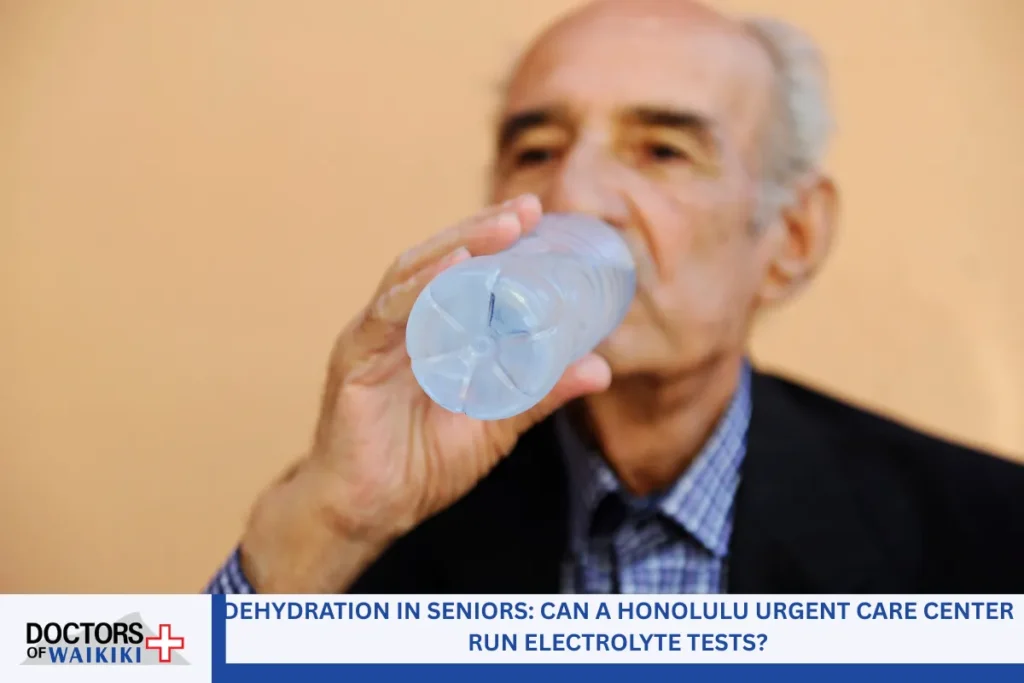
A Honolulu urgent care center can be a critical first stop when an older loved one shows signs of dehydration. Seniors lose fluids faster, feel thirst less, and face higher risks from even mild imbalances in sodium or potassium. Left untreated, dehydration can progress from fatigue and dizziness to confusion, organ damage, or worse. The good news is that many walk-in clinics across Honolulu are equipped to run electrolyte blood panels, assess kidney function, and start iv fluids the same day. This article explains what to expect, how to recognize the warning signs, and when the emergency room is the safer choice.
Key Takeaways
- Most urgent care centers in Honolulu can perform electrolyte tests for dehydration in seniors, often with on-site lab results available the same day.
- Urgent care treats mild to moderate dehydration effectively through oral rehydration, electrolyte correction, and iv fluids when needed.
- Older adults are at higher risk because of reduced thirst, chronic conditions, medications, and Honolulu’s warm climate.
- Emergency rooms handle severe dehydration and related complications such as chest pain, confusion, trouble breathing, or signs of shock.
- Earlier evaluation at a walk-in clinic can prevent progression to life threatening dehydration that requires hospitalization.
Honolulu Urgent Care Center Options for Dehydrated Seniors: Fast Answer to the Main Question

If your parent or grandparent is feeling weak, dizzy, or drinking less than usual, a same-day visit to a local urgent care center can provide answers quickly. Most modern Honolulu locations can check vital signs, draw blood for an electrolyte panel, and administer iv fluids for mild to moderate dehydration, all without the long wait of a hospital emergency room.
Urgent care is appropriate when the senior is awake, speaking normally, and breathing comfortably but clearly not feeling right. On-site lab testing measures electrolyte levels such as sodium, potassium, chloride, and bicarbonate, and checks kidney function through blood urea nitrogen and creatinine. Many point-of-care machines used in these clinics deliver results within ten minutes, allowing the doctor to make treatment decisions fast. Urgent care visits typically have shorter wait times than ERs, making them a practical first step.
However, if you observe chest pain, severe confusion, trouble breathing, or cold and mottled skin, call 911 immediately. Those are signs of a medical emergency that requires hospital-level care. For everything else that falls short of that threshold, an urgent care doctor can evaluate, treat, and guide next steps.
Why Seniors in Honolulu Are at Higher Risk for Dehydration

Adults over 65 face a unique combination of physiological changes and environmental factors that make dehydration more common and more dangerous. In Honolulu’s year-round warmth and humidity, these risks multiply.
Age-related changes that increase vulnerability include:
- Reduced thirst sensation, meaning older adults may not feel intense thirst even when fluid levels drop
- Less total body water compared to younger adults
- Decreased kidney ability to concentrate urine and conserve water
- Slower cardiovascular response to fluid loss
Common medications add another layer of risk. Diuretics prescribed for blood pressure or heart failure increase urine output. Laxatives, certain diabetes drugs, and some psychiatric medications can also accelerate fluid and electrolyte losses. Children and seniors are at higher risk for dehydration than the general population, but seniors face the added challenge of multiple prescriptions working against their fluid balance.
Chronic conditions like heart failure, kidney disease, and diabetes make the margin for error even smaller. Too little fluid can cause acute kidney injury, while too much can trigger pulmonary edema in a patient with a weak heart.
Local factors matter as well. Heat exposure can cause dehydration during outdoor activities, and Honolulu’s tropical climate means this risk exists every month, not just summer. Visiting kupuna spending time at the beach or walking through Waikiki may not realize how much fluid they are losing through sweat. Social factors such as living alone, cognitive decline, or limited mobility can delay recognition of symptoms and delay seeking medical care.
Families and caregivers should know baseline behavior and quickly notice subtle changes like increased sleepiness, irritability, or confusion.
Early Warning Signs of Dehydration in Older Adults

Symptoms in seniors can be subtle. Early recognition allows an urgent care doctor to treat dehydration before it progresses to something that requires an emergency room. Dehydration can result from not drinking enough fluids, but illness, heat, and medications can all contribute.
Mild to moderate symptoms to watch for:
- Dry mouth and cracked lips
- Dizziness or lightheadedness when standing
- Fatigue and general weakness
- Headache and muscle cramps
- Decreased urination or darker urine
- Mild constipation or poor appetite
Dark yellow urine indicates dehydration severity and is one of the easiest signs for caregivers to monitor at home.
Senior-specific signs that family members often miss:
- New confusion, difficulty concentrating, or worsening of baseline dementia
- Increased falls or unsteadiness
- Unusual sleepiness during the day
- Sudden inability to perform normal daily tasks
- Irritability or withdrawal
Seniors should seek urgent care for symptoms like dizziness or fatigue that do not improve with rest and drinking more water.
Red-Flag Signs That Require the Emergency Room
- Chest pain or rapid heartbeat
- Trouble breathing or shortness of breath
- Very low urine output or no urination for many hours
- Cold, clammy, or mottled skin
- Fainting, seizures, or inability to stay awake
- Severe confusion or unresponsiveness
Severe dehydration can cause confusion and rapid heartbeat, and these warrant immediate emergency care rather than a walk-in clinic. Any fever combined with vomiting or diarrhea, or a suspected infection like pneumonia or urinary tract infection, can dehydrate seniors rapidly and should prompt same-day evaluation. Vomiting can cause significant dehydration if it lasts days. Diarrhea can lead to dehydration, especially in children, but it poses serious risks for older adults as well. Symptoms of dehydration can include muscle aches and headaches that worsen over time.
Keep a simple symptom log noting the time of last drink, urine output, and episodes of ongoing vomiting or diarrhea. Share this with the provider when you arrive.
Read Fell Down? How a Honolulu Urgent Care Center Treats Falls and Provides Crutches
How a Honolulu Urgent Care Visit Evaluates Dehydration and Electrolytes

When you bring a dehydrated senior to a walk-in clinic, the process is designed to be calm, efficient, and thorough. Here is what to expect.
Intake and triage. The clinical team measures vital signs including blood pressure (lying and standing), heart rate, temperature, and oxygen saturation. Weight is recorded when possible. This initial screening helps rule out life threatening issues and guides how urgently treatment should begin. Dehydration treatment includes assessing vital signs and symptoms as the foundation of every evaluation.
Medical history. The clinician will ask about current medications, prior kidney or heart problems, recent illnesses such as flu symptoms, food poisoning, or gastroenteritis, and fluid intake over the past twenty-four to forty-eight hours. Bringing your insurance card and an up-to-date medication list can save time.
Physical exam. Providers check skin turgor, mucous membranes, capillary refill, lung and heart sounds, and mental status. Abdominal tenderness is assessed to look for underlying causes.
Lab work. Common tests include a basic metabolic panel measuring sodium (normal range 135 to 145 mmol/L), potassium (3.5 to 5.0 mmol/L), chloride, bicarbonate, blood urea nitrogen, and creatinine. Sometimes glucose levels and a complete blood count are added. Many urgent care clinics draw blood on-site and run point-of-care testing or send samples to a nearby lab with same-day results.
Urinalysis can determine hydration status and check for infections, which is one of the most common triggers of dehydration in seniors. Specific gravity of the urine gives an objective measure of how concentrated it is.
Board certified providers use all of these findings together to decide whether the senior can be safely treated at the clinic or needs transfer to the nearest emergency department. Doctors of Waikiki and Queen’s Health Systems offer immediate dehydration treatment, and urgent care teams across Honolulu follow similar evaluation protocols.
How Urgent Care Can Treat Dehydration in Seniors and When IV Fluids Are Used

Mild to moderate dehydration is often managed entirely at an urgent care center in Honolulu, while more severe cases are referred to a hospital for continuous monitoring.
Oral rehydration. For seniors who can swallow safely, the first approach is small, frequent sips of water or oral rehydration solutions. A sports drink may help replace electrolytes in some cases, though providers often prefer medical-grade solutions with balanced sodium and potassium. Urgent care can provide oral rehydration solutions for dehydration and send patients home with clear instructions on fluid goals.
When IV fluids are chosen. Clinics can provide IV hydration therapy after a medical assessment. IV fluids may be administered for moderate dehydration cases when the patient has ongoing vomiting, severe nausea, inability to keep liquids down, dizziness with standing, or lab results showing significant electrolyte imbalance. Typical fluids include normal saline or balanced crystalloids, and the clinician tailors the rate and volume based on heart, kidney, and medication history.
Caution in complex patients. Seniors with heart failure or kidney disease require careful fluid management. Urgent care staff may limit infusion rates or consult with hospitalists or cardiologists when needed to avoid fluid overload. This is one area where personalized care makes a real difference.
Electrolyte correction. Low sodium or potassium may be gently corrected at the clinic. In more serious cases, transfer to an emergency room for continuous cardiac monitoring is the safer path.
Urgent care services may also include medications to control nausea, fever, or diarrhea, plus treatment of underlying infections such as urinary tract infection or mild pneumonia when appropriate. Families should ask additional questions during the visit about home monitoring, follow up care timing, and warning signs that should trigger immediate emergency care.
Choosing Between Urgent Care and the Emergency Room for a Dehydrated Senior

Both urgent care and emergency rooms serve important roles, and the decision comes down to severity and overall stability of the patient.
Urgent care is best for prompt care of non emergency conditions. If the senior is awake, speaking normally, and breathing comfortably, a walk-in clinic provides convenient care with shorter wait times. No appointment needed at most Honolulu locations, and many are open seven days a week with extended hours for evening immediate care.
Scenarios suited for urgent care:
- Mild to moderate weakness or feel weak after reduced fluid intake
- Several episodes of vomiting or diarrhea without blood
- Mild dizziness or muscle aches in hot weather
- Early signs of a urinary infection or worsening fatigue
- Minor injuries alongside dehydration symptoms
- Common illnesses like a stomach bug or mild fever
- Skin rashes or eye infections unrelated to dehydration but needing attention during the same visit
Scenarios requiring the emergency room:
- Chest pain, shortness of breath, or trouble breathing
- Confusion, inability to stay awake, or signs of stroke
- Very low blood pressure or rapid heart rate
- Seizures, no urination for many hours, or suspected sepsis
- Severe abdominal pain, black or bloody stool, or very high fever
- Allergic reactions causing swelling or difficulty swallowing
Severe dehydration symptoms require immediate ER attention. However, urgent care teams will transfer patients to the hospital if evaluation reveals higher risk than expected, so starting at an urgent care center is reasonable when you are unsure but the senior appears stable.
Proximity, transportation, and time of day also matter. Some Honolulu clinics stay open late, which can prevent overnight worsening when a primary doctor’s office is closed. Children may show fewer wet diapers when dehydrated, and for very young children showing similar signs alongside a sick grandparent, a single urgent care visit can address both.
Practical Steps Families Can Take to Prevent Dehydration in Honolulu’s Seniors
Prevention is easier than treatment, especially for older adults who can decompensate quickly in warm climates. Here are strategies that work.
Daily hydration habits:
- Set fluid goals approved by the primary doctor, typically six to eight cups unless restricted
- Use phone alarms or written reminders to drink more water throughout the day
- Offer water-rich foods like soups, watermelon, cucumbers, and oranges
- Keep drinks within easy reach on nightstands, counters, and in common areas
Precautions during hot and humid days:
- Stay indoors during peak heat, usually between ten in the morning and three in the afternoon
- Use fans or air conditioning when available
- Wear lightweight, breathable clothing
- Take frequent rest breaks during any outdoor activity
Overcoming common barriers:
- Fear of nighttime bathroom trips can be addressed by front-loading fluid intake earlier in the day
- Mobility issues can be helped with assistive devices or a bedside commode
- If plain water is unappealing, offer flavored low-sugar drinks or herbal teas
When illness strikes. If vomiting, diarrhea, or fever occurs, contact a walk-in clinic the same day so oral rehydration and medications can start before dehydration becomes severe. Keep an up-to-date medication list and share it with each urgent care doctor to reduce the risk of drug-related fluid loss.
Create a family plan. Decide in advance which clinic you will use, which hospital you prefer for emergencies, and how to arrange quick transportation for a fragile senior. Having this plan ready can save time when it matters most.
Honolulu Urgent Care Center – Doctors of Waikiki
At Doctors of Waikiki, we are an urgent care center in Honolulu built for exactly these moments. When your older loved one needs prompt evaluation for dehydration, heat-related symptoms, flu-like illness, or non emergency conditions, our clinic is ready to help. We welcome walk ins seven days a week with extended hours, so no appointment is needed to be seen.
Our experienced staff provides personalized care that includes reviewing each patient’s full medical history, performing on-site lab assessments, and offering quality care tailored to the individual. We handle minor cuts, pink eye, common illnesses, and of course, dehydration with electrolyte testing and iv fluids when appropriate. Our team believes in transparent pricing and convenient care for both Honolulu residents and visitors.
Call us at (808) 922-2112 or fill out our online contact form to ask about symptoms, confirm our current hours, or plan a same-day visit. When we determine that symptoms are more severe, we coordinate transfer to an emergency room promptly. Your family deserves safe, timely, and compassionate medical care, and Doctors of Waikiki is here to deliver it.
Frequently Asked Questions
How quickly do electrolyte test results come back at urgent care?
Many urgent care clinics in Honolulu use point-of-care analyzers that return basic metabolic panel results in roughly five to twelve minutes. These machines measure sodium, potassium, chloride, bicarbonate, and kidney markers from a small blood draw performed on-site. If the clinic sends samples to a nearby reference lab instead, results typically come back the same day, often within a few hours. Faster turnaround means the doctor can make treatment decisions during your visit rather than asking you to return later. When you call ahead, ask whether the clinic runs labs in-house so you can set expectations and plan accordingly for your senior family member.
Can a dehydrated senior fly home after being treated at a Honolulu clinic?
Flying after treatment depends on how severe the dehydration was and how well the senior responded. Cabin air is dry and pressurized, which increases insensible fluid loss during the flight. If the senior received iv fluids and lab values returned to normal, many providers will clear them to fly within twenty-four to forty-eight hours as long as they can maintain oral intake. However, anyone who needed hospital transfer, had significant electrolyte abnormalities, or has underlying heart or kidney disease should get written clearance from the treating doctor before booking a flight. Continue drinking enough fluids throughout the trip and avoid alcohol or caffeine, which can worsen fluid loss.
What should I bring to urgent care if I suspect my parent is dehydrated?
Arrive with a current medication list that includes dosages and frequency, your parent’s insurance card, and identification. Write down a brief timeline of symptoms: when they last ate and drank, how many episodes of vomiting or diarrhea occurred, any fever readings, and changes in mental status or energy level. If your parent uses a home blood pressure monitor or glucometer, bring recent readings. A list of chronic conditions and the name of their primary care doctor is also helpful. Having this information organized helps the urgent care team deliver faster, more accurate care and reduces the chance of a sick visit turning into a longer ordeal.
Are electrolyte drinks safe for all seniors, including those with heart or kidney disease?
Not always. Many commercial electrolyte drinks contain added sodium and potassium, which can be problematic for seniors on fluid-restricted diets or those with chronic kidney disease. Excess sodium may worsen fluid retention and raise blood pressure in someone with heart failure. Excess potassium can be dangerous when kidneys cannot excrete it efficiently. Before recommending any electrolyte drink or sports drink, the urgent care doctor will review kidney function labs and the patient’s medication list. In many cases, plain water or a diluted oral rehydration solution is safer. Always check with a medical provider before adding supplemental electrolytes to a senior’s routine, especially if they take blood pressure pills or diuretics.
How soon should a senior follow up with their primary doctor after an urgent care visit for dehydration?
Most urgent care providers recommend follow up care within two to five days after treatment for moderate dehydration, or sooner if the senior has chronic conditions like diabetes or kidney disease. The primary doctor can recheck electrolyte levels, adjust medications that may have contributed to the episode, and evaluate whether underlying causes like an infection or a medication change need further attention. If new symptoms develop before the scheduled follow-up, such as returning dizziness, fever, or reduced urine output, do not wait. Return to an urgent care center or go to the emergency room depending on severity. Consistent follow-up reduces the risk of repeat episodes and hospital admission.
Disclaimer: This article provides general health information about dehydration and urgent care for seniors. It is not a substitute for professional medical advice, diagnosis, or treatment. Always consult a qualified provider for individual concerns.
Read Emergency Contraception: Can a Honolulu Urgent Care Center Help?